
Guide
Types of valves and their uses: a short buyer guide
The right valve type for the job saves trouble later. This guide covers the five valve types and the Y-strainer you will meet on most sites, and what each one is for.
Valve types at a glance
| Type | Use it for | Avoid it for |
|---|---|---|
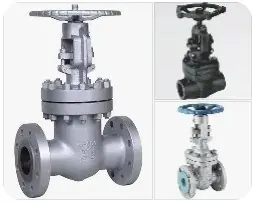
| Gate valve | On/off isolation, fully open or fully closed | Throttling or frequent operation |
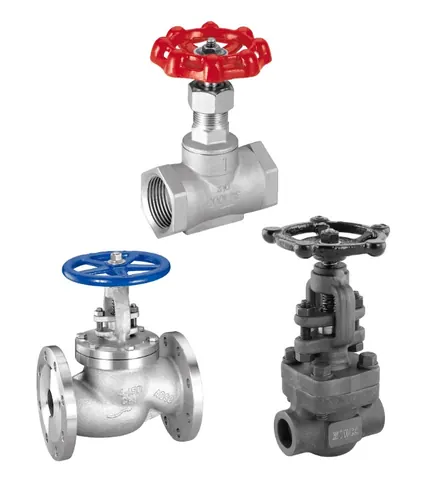
| Globe valve | Throttling and regulating flow | Lines where pressure drop must be low |
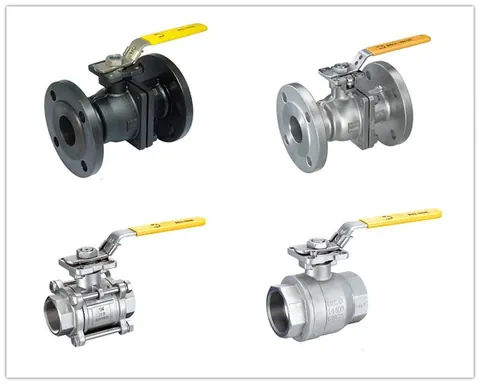
| Ball valve | Quick quarter-turn shut-off | Long-term throttling |
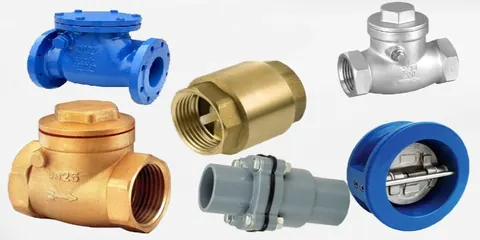
| Check valve | Stopping back-flow automatically | Isolation; it cannot be closed by hand |
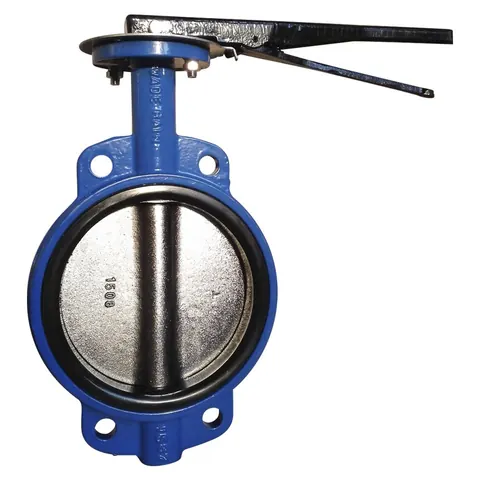
| Butterfly valve | Large-bore isolation in tight spaces | Lines that need a full, clear bore |
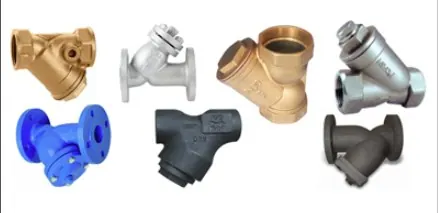
| Y-strainer | Catching debris before pumps, meters and valves | Shutting off flow; it is not a valve |
Gate valves
A gate valve lifts a wedge clear of the flow, so when it is fully open the bore is almost unobstructed. Use it for isolation. Left part-open, the wedge vibrates and the seats wear.
Globe valves
A globe valve turns the flow through the body past a plug and seat, which makes it good at regulating flow. The trade-off is a higher pressure drop than a gate or ball valve.
Ball valves
A quarter turn opens or closes a ball valve, so it is fast and easy to see whether it is open. 1PC bodies are compact, 2PC bodies are general purpose, and 3PC bodies can be serviced in the line. A 3-way ball valve diverts flow.
Check valves
A check valve opens with forward flow and closes when flow reverses. Swing types suit horizontal lines; spring and vertical types can work in vertical lines with upward flow; wafer and dual-disk types are short and fit between flanges, such as after a pump.
Butterfly valves
A butterfly valve turns a disc in the bore. It is short and light, which suits large water and cooling lines. Use a lever on smaller sizes and a gear operator on larger ones. A lug body lets you remove the pipe on one side.
Y-strainers
A Y-strainer holds a screen in a side leg to catch scale and debris. Fit it upstream of the item you want to protect, with the leg pointing down on horizontal lines.
Body, class and ends
- Body: CS (WCB or forged A105) for oil, gas and process lines; SS (SS304 or SS316) for corrosive or clean service; CI, brass or bronze for water.
- Class: match the valve to the line, for example CL150, CL300, PN16 or 800 WOG.
- Ends: flanged for larger lines, NPT, BSPT or SW for small bore. Match the thread to the pipe.
Shop these categories
Questions buyers ask
Can I throttle with a ball valve?
Only briefly. Long-term throttling wears the seats. Use a globe valve to regulate flow.
Do I need a Y-strainer before a pump?
It is good practice. A strainer upstream stops scale and weld slag reaching the pump.
Which valve should go after a pump?
Usually a check valve to stop back-flow, plus an isolation valve such as a gate, ball or butterfly valve.
Send us your list
Sizes, rating, end connection and quantity. We reply with stock and a price.